


Our world today is all about digital devices. Mobile phones are a big part of our lives. Many Americans check their phones just minutes after waking up.
Studies show a worrying trend: over half of users feel anxious without their devices. This points to a growing problem of digital addiction affecting both adults and kids.
This discussion overlaps with did have moon apollo, especially for readers comparing have humans become with similar issues.
Children are learning digital skills before they can read. This raises big questions about our tech use.
Being always connected has its perks. But it also makes us wonder if we’re relying too much on technology.
This article looks into how our technology dependence changes our personal and work lives. We’ll discuss both the good and bad sides of being digitally connected.
The Historical Evolution of Technological Integration
Humanity’s journey with technology is truly remarkable. We’ve moved from simple tools to complex digital systems. Each step has changed how we live and interact with each other.
From Industrial Revolution to Digital Age
The Industrial Revolution was a big step for us. It brought steam engines and machines that changed our way of life. This was the start of our deep connection with technology.
Related Posts:
- Did We Have the Technology to Go to the Moon The…

- How to Overcome Technology Challenges in Education…
- How Many Lives Has Medical Technology Saved The…

- How to Make a Technology From Concept to Real-World…

- What Is Considered Disruptive Technology Innovations…

- What Are Next Generation Technologies AI Quantum and Biotech

In the mid-20th century, computers began to change everything. Early computers were huge but had less power than today’s phones. This shift led to new worries about digital addiction.
Now, we have prosthetics controlled by our brains, showing how far we’ve come. From flint knives to brain interfaces, our tech use has grown a lot.
Accelerated Adoption in the 21st Century
The 21st century saw a huge leap in technology use. The internet and mobile devices became essential. This fast adoption changed how we behave and interact.
The Smartphone Revolution: Apple iPhone and Android Devices
The iPhone changed everything in 2007. It put powerful computers in our pockets. Android devices soon followed, making technology more accessible and competitive.
Today, these devices manage our lives, from banking to health. They’ve become key to our daily routines. But, this constant use raises questions about healthy tech habits.
Social Media Proliferation: Facebook, Twitter, and Instagram
Social media changed how we talk and share. Facebook connected us globally, Twitter made news fast, and Instagram changed how we share photos. These platforms are now key to our communication.
They’ve become essential for staying connected and informed. But, they also lead to digital addiction as we seek validation and news online.
The mix of smartphones and social media has created strong habits. These tech ties keep evolving, bringing both benefits and challenges for how we use them.
Measuring Our Current Technological Reliance
Studies show how much we use digital devices every day. They tell us how technology affects our work and personal lives. This gives us real data on how our relationship with technology is changing.
Quantifying Daily Technology Usage
Research shows we use devices more than ever. In the US, people check their phones about 344 times a day. This shows a big change in how we spend our time and focus our attention.
Smartphone Dependency: Screen Time Analytics
Stats on mobile use show how much we rely on our phones. College students spend 7 hours a day on their phones for fun. These screen time statistics show phones are now our main source of entertainment, not just for talking.
Feeling anxious without our devices is common, with 68% of millennials feeling this way. This shows how deeply connected we are to our devices. This feeling varies by age and how tech-savvy we are.
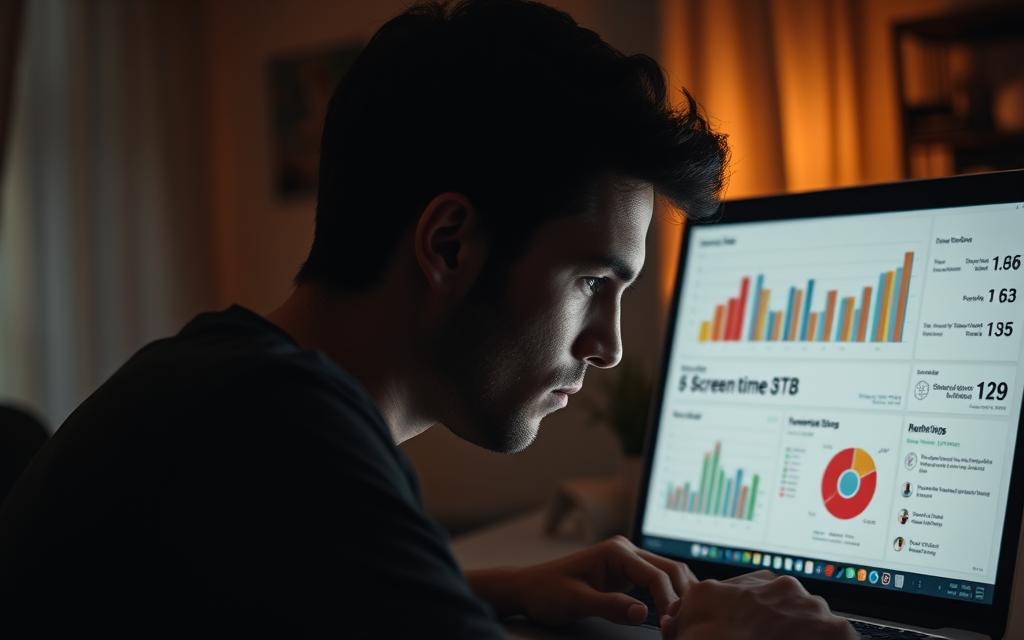
Being always connected is now normal, not just for some. 89% of city dwellers stay online all day. This has changed how we interact and respond to work.
People spend 6 hours and 58 minutes online every day. This is 20% more than before the pandemic. It shows how fast technology has become part of our lives.
Professional Versus Personal Dependence Metrics
Our use of technology changes depending on whether we’re at work or at home. At work, we use tech to get things done. At home, it’s more about fun and social media.
There are big differences in how we use technology:
- At work, we spend 5.5 hours a day on tech, mostly for work.
- At home, we spend 4.2 hours a day, mostly on social media and streaming.
- 78% of workers use the same devices for work and personal stuff.
It’s hard to separate work and personal life because of technology. This makes it tricky to measure how dependent we are on tech.
Our work habits often influence how we use technology at home. Tools we learn at work often help us at home too. This makes our tech use more consistent, but also harder to measure.
Critical Domains of Technological Dependence
Technology has become a big part of our lives. It has changed how we do things and how we interact with each other. This shows how digital tools have changed our abilities and how we connect.
Communication and Social Interactions
Instant messaging has changed how we talk to each other. WhatsApp and Telegram are now key for quick chats, replacing old ways like phone calls and texts.
These apps do more than just send messages. They let us make voice calls, video chat, and share files all in one place. This has made us expect quick answers, changing how we talk to each other.
WhatsApp and Telegram for Instant Messaging
Both apps have grown fast, with WhatsApp having over two billion users. They offer security with encryption and make it easy to chat in groups.
Being always connected through these apps has changed how we keep in touch. It has also changed how we see relationships and social interactions.
Social Media Platforms: Facebook, Instagram, and TikTok
Social media has become a big part of our lives. Facebook keeps us connected, Instagram shows off our lives, and TikTok is all about short videos.
These platforms are where we get news, entertainment, and feel connected. People spend about two hours a day on social media.
Navigation and Spatial Awareness
Digital maps have changed how we find our way. We don’t need to read maps or understand places as much anymore because of GPS.
Research shows 43% of drivers can’t find their way without GPS. This shows how much we rely on technology to navigate.
Google Maps and Apple Maps Dependency
These apps give us directions, traffic updates, and when we’ll arrive. But, they’ve made us less skilled at understanding maps.
Using these apps means we don’t need to think about where we are as much. They do the thinking for us, making it easier but less challenging for our brains.
Memory and Cognitive Functions
Technology has changed how we remember things. Smart devices help us remember by storing information for us.
This has an impact on our brains. Studies show 68% of adults under 35 struggle with math without a calculator.
Smartphone Notes and Reminders Applications
These apps have replaced our own memory tricks. We now rely on them for birthdays, appointments, and tasks.
While they’re convenient, they might make us less good at remembering things on our own. Our brains need practice to stay sharp.
Internet Search Replacements for Personal Recall
We remember how to find information instead of remembering it ourselves. This changes how we learn and remember.
Research from cognitive studies shows this can lead to cognitive decline. We might not remember as much because we can always find it online.
This shows a paradox: we have more information than ever but might remember less. The link between technology use and cognitive decline is something we need to think about in our digital world.
Professional Life Transformations
The modern workplace has changed a lot. Now, we rely heavily on technology for work. This change has changed how we work, talk, and learn new skills in many fields.
Remote Work Infrastructure Dependence
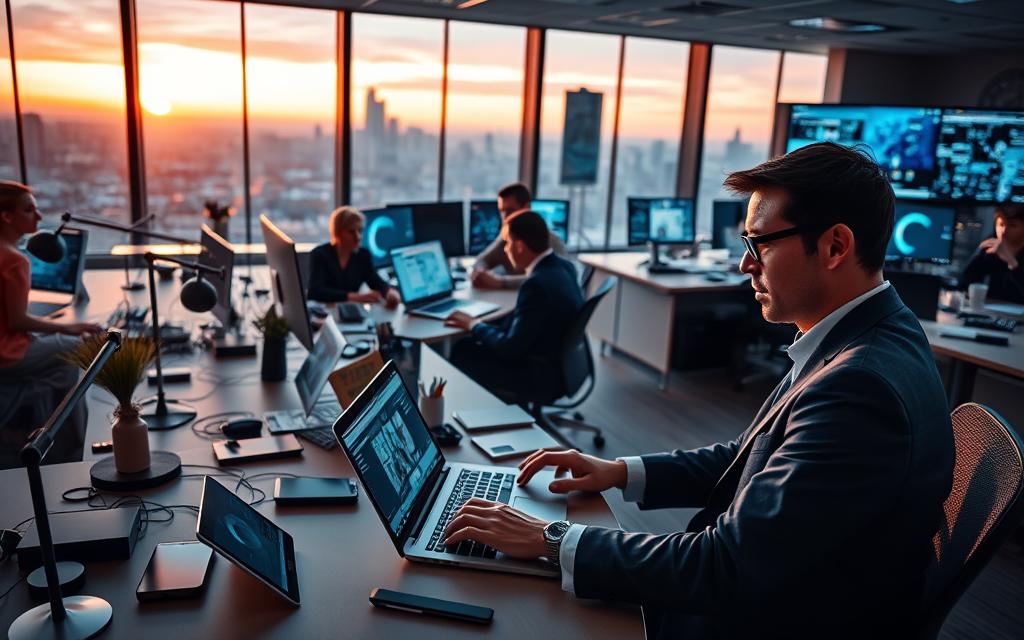
The pandemic made us rely more on digital tools for working together. Tools like Microsoft Teams and Zoom are key for talking and managing projects over long distances.
This tech helps us:
- Have smooth virtual meetings with people all over the world
- Share files and work together easily
- Keep track of projects and tasks
- Access company resources safely from anywhere
But, these tools also mean we need the internet and to know how to use technology well.
Automation Across Various Industries
Automation has changed how we make things and serve customers. It has made things more efficient but also made it hard for people to keep up.
Manufacturing Robotics in Automotive Factories
Car factories now use advanced robots to do tasks fast and accurately. This has made making cars 34% more efficient. But, it has also made it hard for workers to find new jobs.
Companies are getting more work done, but workers are facing the challenge of learning new skills.
Artificial Intelligence in Customer Service Chatbots
AI chatbots have changed customer service. They work all the time and answer simple questions well. They get better at solving problems as they learn from people.
But, 63% of workers who lost their jobs to automation struggle to use the technology that replaced them. This shows a big gap in skills in today’s job market.
Skill Set Evolution and Requirements
The jobs we have today are very different from the ones we had a decade ago. Now, knowing how to use technology, understand data, and work together online is key.
Old jobs in making things have changed. Now, we need skills in:
- Robotics maintenance and programming
- Managing and checking AI systems
- Understanding and working with data
- Knowing about keeping systems safe from hackers
It’s hard for people to learn new skills, and only a few companies help them. This makes a big gap between those who can use technology and those who might lose their jobs.
This reliance on technology is both a chance and a challenge. Businesses get more done and connect with the world better. But, workers must keep learning new things, making their jobs both exciting and uncertain.
Psychological and Social Consequences
The digital revolution has changed us deeply. It affects how we think, interact, and feel. We must look closely at these changes.
Attention Span and Concentration Impacts
Today’s digital world changes how we handle information and stay focused. The endless notifications and quick changes make it hard to focus on one thing.
This has led to “continuous partial attention.” We’re always distracted, never fully present.
TikTok and Short-Form Content Effects on Focus
Platforms like TikTok have changed how we get information. They make us expect quick, short content.
This makes it hard to focus on longer, more complex things. Oxford University Press called this “brain rot,” a sign of mental decline from too much online junk.
People, young and old, feel anxious without their devices. They struggle to pay attention and learn in traditional ways. This is because they grew up in a world of fast media.
Social Skills and Personal Interaction Changes
How we talk to each other has changed a lot. We now use digital tools instead of face-to-face talks. This has changed how we connect and understand each other.
Digital Communication Versus Face-to-Face Interactions
Digital chats lack the body language and tone we get in real talks. They make us think before we respond, but miss the emotional depth of live chats.
People act differently online than in real life. This can lead to misunderstandings. Digital chats also reduce the chance to practice important social skills.
Mental Health Considerations and Research
Studies show a link between tech use and mental health. It’s not all bad, but how we use tech matters a lot.
Social Media Comparison Culture on Instagram
Instagram and similar sites show perfect lives, making us feel bad about ours. This constant comparison can lead to sadness and low self-esteem.
Research links heavy Instagram use to depression, mainly in the young. The visual nature of Instagram makes appearance comparisons worse. Algorithms also feed us more of the same idealised content.
Digital Addiction Patterns and Treatment
Internet addiction works like drug addiction in the brain. It causes obsession, withdrawal, and ignoring problems. It’s a serious issue.
Treatment combines therapy and learning about digital use. It helps people use tech in a healthier way, not cut it out completely.
Studies suggest that using tech mindfully is better than cutting it out. The goal is to find a balance that keeps us healthy.
Have Humans Become Too Dependent on Technology
Technology has brought us great convenience but also risks. We must weigh the benefits against the dangers of relying too much on it.
The Case for Excessive Dependence
Some say we’re too dependent on technology. Our systems are vulnerable and could fail at any time.
Vulnerability to System Failures and Cyber Attacks
The 2023 NHS cyberattack showed how vulnerable we are. It hit 1,200 primary care services and exposed 3.4 million patient records.
The costs to fix it were £92 million. There was also a 12% rise in safety incidents. Such attacks show how digital systems can be exploited.
Loss of Traditional Navigation and Memory Skills
Using GPS has made us lose our wayfinding skills. Digital devices have changed how we remember things.
Research shows we’re not as good at spatial awareness and memory. This is a worrying side effect of our tech use.

The Case for Necessary Adaptation
Others see technology as progress, not a problem. It has changed our work and personal lives for the better.
Efficiency and Productivity Gains in Business
Businesses have become more efficient with technology. It automates tasks, freeing up people to be creative and strategic.
Studies show productivity has gone up in many industries. This means better use of resources and more work done.
Global Connectivity and Information Access Benefits
Technology has made it easy to talk and share information worldwide. It has opened up new ways to work together and learn.
It has changed education, research, and culture. It has made knowledge more accessible to everyone.
Balancing Technological Integration Approaches
Finding the right balance with technology is key. We need strategies that use its benefits while avoiding its risks.
Good strategies include:
- Maintaining backup systems for critical operations
- Keeping traditional skills alive through practice
- Strong cybersecurity measures
- Digital literacy programs
By seeing technology as a tool, not a replacement, we can use it wisely. The goal is to improve our abilities, not replace them.
Strategies for Healthy Technological Relationships
To balance technology use, we need smart strategies. These help keep our minds sharp while using digital tools. They also protect human skills that might fade with too much device use.
Digital Detox Practices and Implementation
Stepping away from screens is key for digital detox methods. Studies show it boosts focus and cuts down on digital tiredness.
Scheduled Technology-Free Periods and Zones
Setting times and places without devices is a good start. Experts say no devices during meals and before bed improves sleep and family time.
Make some areas tech-free, like bedrooms or dining rooms. This helps keep real connections strong and stops constant digital distractions.

Use grayscale displays and set app limits to aid detox. These steps make digital use less tempting and more thoughtful.
Conscious Usage Awareness Techniques
Being mindful with tech means knowing why we use it. This stops us from aimlessly scrolling and makes our device use more meaningful.
Mindful Social Media Consumption Practices
Choosing what we see online is key for better tech use. Unfollow things that upset you and focus on content that adds value or teaches you something.
Before checking social media, think about why. Ask yourself: “What purpose does this session serve?”.
Use time limits on social media to stay in control. This can be through device settings or apps.
Skill Preservation and Development Efforts
Keeping our analog skills sharp is vital. Regularly doing non-tech activities keeps our minds sharp and prevents skills loss.
Maintaining Analog Navigation and Memory Capabilities
Using maps instead of GPS boosts spatial skills. Try navigating without digital help sometimes.
Exercises like memorising numbers or lists keep our brains sharp. These activities prevent us from relying too much on devices for memory.
Doing things like reading books, writing, or playing games keeps our minds active. These activities are different from screen time and are good for our brains.
These digital detox methods and ways to keep skills sharp are practical. They help us stay healthy with technology while keeping our human abilities strong.
Conclusion
Our relationship with technology is complex and needs careful thought. It brings many benefits like making things more efficient and connecting us better. But, it also challenges our minds, emotional health, and how we interact with others.
Social media has changed how we talk and connect with each other. It’s made our lives more connected but might also make our relationships and focus weaker.
We must find a balance between technology and our well-being. This means taking breaks from screens, talking to people face-to-face, and checking the truth of what we see online.
Technology should help us, not control us. By using it wisely and keeping our human skills sharp, we can enjoy its benefits. This way, we protect our minds and keep our social bonds strong.
FAQ
What are the key milestones in the historical evolution of human-technology integration?
The journey from the Industrial Revolution to today’s digital age is key. Apple’s iPhone and Android devices led a smartphone revolution. Social media platforms like Facebook, Twitter, and Instagram also played a big role.
FAQ
What are the key milestones in the historical evolution of human-technology integration?
The journey from the Industrial Revolution to today’s digital age is key. Apple’s iPhone and Android devices led a smartphone revolution. Social media platforms like Facebook, Twitter, and Instagram also played a big role.
How can we measure current levels of technological dependence?
FAQ
What are the key milestones in the historical evolution of human-technology integration?
The journey from the Industrial Revolution to today’s digital age is key. Apple’s iPhone and Android devices led a smartphone revolution. Social media platforms like Facebook, Twitter, and Instagram also played a big role.
In which domains has technological dependence become most pronounced?
FAQ
What are the key milestones in the historical evolution of human-technology integration?
The journey from the Industrial Revolution to today’s digital age is key. Apple’s iPhone and Android devices led a smartphone revolution. Social media platforms like Facebook, Twitter, and Instagram also played a big role.
How has technology transformed professional environments?
FAQ
What are the key milestones in the historical evolution of human-technology integration?
The journey from the Industrial Revolution to today’s digital age is key. Apple’s iPhone and Android devices led a smartphone revolution. Social media platforms like Facebook, Twitter, and Instagram also played a big role.
What are the psychological and social consequences of technological over-dependence?
FAQ
What are the key milestones in the historical evolution of human-technology integration?
The journey from the Industrial Revolution to today’s digital age is key. Apple’s iPhone and Android devices led a smartphone revolution. Social media platforms like Facebook, Twitter, and Instagram also played a big role.
Is human dependence on technology excessive or necessary?
FAQ
What are the key milestones in the historical evolution of human-technology integration?
The journey from the Industrial Revolution to today’s digital age is key. Apple’s iPhone and Android devices led a smartphone revolution. Social media platforms like Facebook, Twitter, and Instagram also played a big role.
What strategies can help develop healthier relationships with technology?
FAQ
What are the key milestones in the historical evolution of human-technology integration?
The journey from the Industrial Revolution to today’s digital age is key. Apple’s iPhone and Android devices led a smartphone revolution. Social media platforms like Facebook, Twitter, and Instagram also played a big role.
How does technology affect memory and cognitive functions?
FAQ
What are the key milestones in the historical evolution of human-technology integration?
The journey from the Industrial Revolution to today’s digital age is key. Apple’s iPhone and Android devices led a smartphone revolution. Social media platforms like Facebook, Twitter, and Instagram also played a big role.
What role does social media play in technological dependence?
FAQ
What are the key milestones in the historical evolution of human-technology integration?
The journey from the Industrial Revolution to today’s digital age is key. Apple’s iPhone and Android devices led a smartphone revolution. Social media platforms like Facebook, Twitter, and Instagram also played a big role.
Are there differences in technological dependence across age groups or demographics?
FAQ
What are the key milestones in the historical evolution of human-technology integration?
The journey from the Industrial Revolution to today’s digital age is key. Apple’s iPhone and Android devices led a smartphone revolution. Social media platforms like Facebook, Twitter, and Instagram also played a big role.