



Turning a great idea into something real is a thrilling challenge today. This technology development process needs careful planning and smart action at every step.
The path from idea to market involves many key stages. Each one needs special knowledge and a clear plan to beat challenges.
Those who succeed know it’s not just about the tech. Understanding the market, what users need, and having a solid business plan are also key. These elements are essential for a successful innovation journey.
This guide will cover the main ideas behind making technology work. We’ll look at the mindset and methods that turn ideas into real things we can use every day.
Understanding the Complete Development Journey
Every new technology starts with a clear vision and a thorough validation process. Before investing a lot, innovators must define their technology and do detailed market research. These steps help figure out if an idea can make money.
Defining Your Core Technology Concept
Technology concept development begins with clear definition. An invention is “any practical product, process, device, machine, or composition of matter—a chemical or biological compound, for instance—that is either wholly new or an improvement of an existing machine, process, or product.”
This means there’s a difference between new inventions and making something better. Teams should focus on solving specific problems, not just being new.
Start with a problem, then design tech to solve it. By understanding users’ struggles, teams can create solutions that really help.
Defining your concept clearly means writing down technical details, what it does, and what makes it special. This is key for making prototypes and protecting your idea.
Related Posts:
- What Is Considered Disruptive Technology Innovations…

- How to Overcome Technology Challenges in Education…

- Are Science and Technology the Same Thing Key…

- Have Humans Become Too Dependent on Technology The…

- Is HTML a Web Technology The Foundation of Web Development

- What are Front End Technologies? Your Complete Guide…

Conducting Comprehensive Market Research
Market validation is key to knowing if your tech is worth pursuing. It checks if your solution meets real market needs and can make money.
Good market research looks at several things:
- Who your target audience is and what they struggle with
- What competitors offer and where you can improve
- Any barriers to adopting your technology
- How much people are willing to pay and the market size
Experts suggest doing three checks at once: if people want it, if it makes sense financially, and if it can be done. This ensures your tech is wanted, profitable, and feasible.
Doing a good innovation assessment early on saves resources. It involves getting both numbers and stories from surveys, interviews, and testing your prototype with users.
| Concept Type | Key Characteristics | Development Considerations | Market Validation Approach |
|---|---|---|---|
| Wholly New Invention | No direct competitors, novel functionality | Higher development risk, education required | Focus on problem validation and adoption barriers |
| Existing Technology Improvement | Familiar user base, incremental benefits | Lower education cost, comparison inevitable | Competitive analysis and superiority demonstration |
| Process Innovation | Operational efficiencies, behind-scenes benefits | Integration requirements, implementation cost | ROI calculation and transition feasibility |
| Platform Technology | Enables other innovations, ecosystem potentials | Partnership development, scalability planning | Developer adoption and ecosystem growth potentials |
The research phase answers important questions about market size, growth, and customer willingness to pay. This info guides your development and business plans.
How to Make a Technology: The Development Phase
The development phase is key. It turns ideas into real technologies. This stage needs careful planning and detailed work to make your idea real.
Creating Detailed Technical Specifications
Technical specifications are the first step. They turn your idea into a detailed plan. This plan guides the whole development process.
Good specs include:
- Functional requirements that say what the tech must do
- Performance metrics to measure success
- Technical details like materials and size
- How it will work with other systems
Technology transfer offices stress the need for careful checks. They say:
They will check your invention to see if it can be sold. They look at the market, competitors, and if it’s possible to make it.
Building and Validating Prototypes
Prototype development makes your idea real. It’s a step-by-step process. Each step helps make the tech better before it’s made for real.
Good prototype development means:
- Start with simple versions that show the main idea
- Keep improving based on what you learn
- Think about what users want
- Know what you need to check with each version
Design thinking is great for technology validation. It helps get feedback from users. This makes sure your tech meets real needs.

Testing should check how well the tech works and if users like it. Lab tests check if it meets specs. User tests see if it’s easy to use and if people will use it.
Getting quick feedback from users is key. It helps make your tech better. It makes sure it meets both technical and market needs.
Technology validation means testing it hard, checking if it works with other things, and seeing if users like it. This careful approach lowers risks and boosts chances of success.
Intellectual Property Protection Strategies
Protecting your innovation is key in technology development. IP protection stops competitors and secures your rights. It needs careful planning and resources.
Technology transfer offices start patent strategy when they see commercial value. They handle complex IP rights, balancing protection and cost. This requires careful thought to build strong defenses.
Patent Applications and Strategic Considerations
Filing with the United States Patent and Trademark Office starts the protection journey. You might also file internationally for global markets. This approach increases coverage but also costs.
The patent process is uncertain and costly. It takes years and tens of thousands of dollars. A good patent strategy is vital for managing resources.
Key decisions include:
- When to file first
- Where to file based on markets
- How wide to make claims
- How much to spend on fees
Patents stop others from using your tech without permission. This right is the base of many business plans. The cost of IP protection is worth it for this defense.
Trademark and Copyright Considerations
Patents cover inventions, but technology copyright protects creative work. Copyright automatically covers software and designs. Registration makes these rights stronger and allows for damages.
Trademark protection keeps your brand safe. It covers names, logos, and slogans. This stops confusion and grows your brand value.
An integrated IP approach uses all these methods:
| Protection Type | What It Covers | Duration | Registration Required |
|---|---|---|---|
| Patent | Inventions and processes | 20 years | Yes |
| Copyright | Creative expressions | Author’s life + 70 years | Optional (recommended) |
| Trademark | Brand identifiers | Indefinite with use | Yes |
Good IP protection needs ongoing work. This includes fees, watching for infringement, and enforcing rights. Many set aside money for these tasks.
Using patents, trademarks, and copyrights protects your innovation fully. This multi-layered defense guards your tech’s function and look. Strategic IP management is a key business asset throughout your tech’s life.
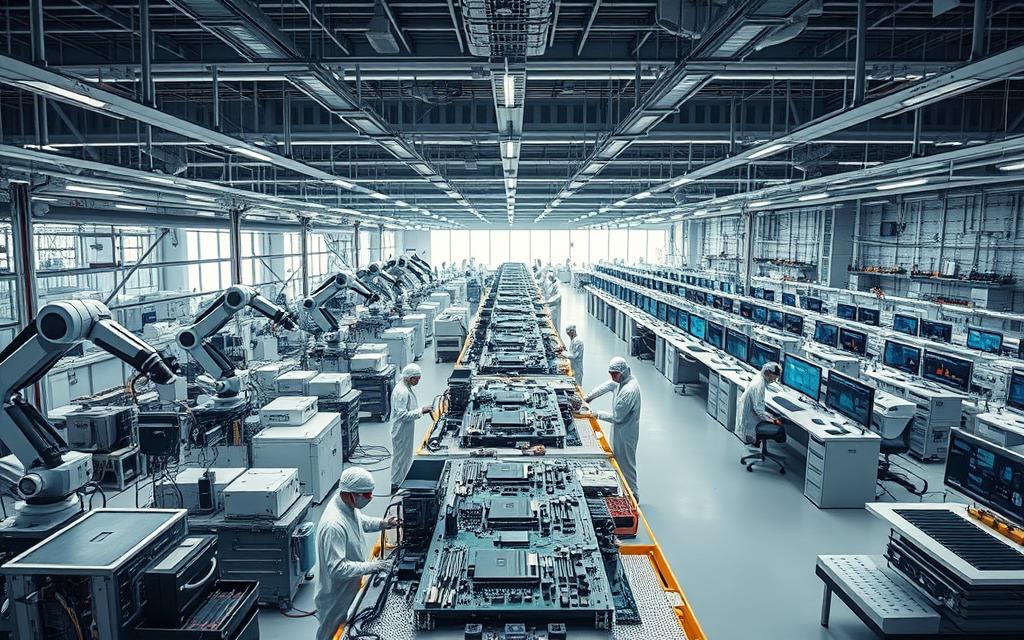
Manufacturing and Production Planning
Going from idea to mass production is a big step in tech development. It needs careful planning to make sure your product is good and reliable. Many companies get help from technology transfer offices. They offer special facilities and advice on rules.
Selecting Manufacturing Partners and Facilities
Finding the right manufacturing partners is important. You need to check if they can make your product and if they can make enough. Look at these key points when picking partners:
- Technical skills and the equipment they have
- How much they can make and if they can grow
- Where they are and how easy it is to get things there
- How much it costs and how you pay
- What others say about them
Many tech creators team up with makers who get complex tech. These partnerships can grow into strong alliances that help your business grow.
| Evaluation Criteria | Priority Level | Assessment Method | Risk Factors |
|---|---|---|---|
| Technical Capability | High | Facility audit and sample production | Incompatible equipment or expertise |
| Quality Systems | High | Certification review and process documentation | Inconsistent output quality |
| Cost Structure | Medium | Comparative quotation analysis | Hidden costs or price fluctuations |
| Scalability | Medium | Capacity planning discussions | Production bottlenecks during growth |
| Communication | Medium | Reference checks and trial period | Misunderstandings in specifications |
Implementing Quality Control Systems
Good quality control is key to making tech products well. It makes sure every item works as it should. Quality control starts with clear rules for every step of making.
Make tests to check if parts and finished products are good. Use methods like statistical process control to spot problems early. Regular checks and always trying to get better keep quality high.
Many makers use ISO 9001 quality systems. These systems help keep things the same and track how well things are going. Proper production planning and scheduling adds quality checks at every step.
Quality control is not just at the start. You also need plans for dealing with returns, finding out why things fail, and making things better based on how they work in real life.
Regulatory Compliance and Certification Requirements
Understanding and following regulatory rules is key when launching new tech. It ensures your product is legal, safe, and eco-friendly. Getting compliance certification early can avoid costly delays and redesigns.
Understanding Industry-Specific Regulations
Each tech sector has its own set of rules. For example, health tech must follow strict FDA rules in the US. Consumer electronics have their own set of standards. Knowing these rules early helps avoid market entry hurdles.
In healthcare, new tech can face resistance. As tools like clinical decision support become common, doctors must learn to use them. This shows compliance is not just about tech specs but also about how people use them.
To tackle these challenges, consider these steps:
- Find out who regulates your tech sector
- Get compliance help from the start
- Keep records of your compliance efforts
- Keep up with changing rules
Meeting Safety and Environmental Standards
Safety and environmental rules are vital for tech development. They ensure products are safe and meet performance standards. These rules vary by industry but often include testing, material checks, and failure analysis. Environmental rules focus on energy use, material sourcing, and disposal.
Designing with safety and environmental factors in mind leads to better tech. It meets today’s high standards for responsible innovation. As one expert says:
Focus on ethics and make sure tech is developed and used responsibly and sustainably.
Good strategies for safety and environmental compliance include:
- Do thorough risk assessments early on
- Use quality control to check safety
- Choose materials and parts that are eco-friendly
- Keep detailed records of safety tests
Meeting these standards shows you’re committed to safe and effective tech. This approach builds trust with users and regulators.
Commercialisation and Market Entry Strategies
Getting your technology to market needs careful planning. This stage turns your innovation into a business that can make money. It finds the right customers and sets up steady income.

Developing Effective Go-to-Market Strategies
Start by knowing who your customers are and what they need. This helps you figure out how to introduce your tech to them. It’s the first step to getting noticed in the market.
Licensing agreements are a strong way to make your tech available. They involve talking through the terms with the people who will use your tech. This makes sure both sides are happy with the deal.
“After a licensee has been selected, the TTO and licensee will negotiate the licensing agreement to determine the terms of technology transfer. These agreements include details such as intellectual property rights, royalties, and responsibilities of both parties.”
Partnering with big companies is another good way to get to market. These partnerships can give you access to more customers and help you grow.
Going direct to the market is also common. This way, you keep full control but it takes a lot of work and money.
Pricing Models and Distribution Channels
Choosing the right price for your tech is key. Your price should show how valuable your tech is, how much it cost to make, and how it compares to others.
There are a few ways to price your tech:
- Value-based pricing: Prices based on what customers think it’s worth
- Tiered pricing: Offers different levels of features at different prices
- Subscription models: Makes money by charging for ongoing access
- One-time licensing fees: Charges once for the right to use the tech
How you get your tech to customers matters too. The best way depends on who you’re trying to sell to, what your tech does, and how you plan to make money.
| Distribution Channel | Best For | Key Considerations |
|---|---|---|
| Direct Sales | High-value enterprise solutions | Needs a dedicated sales team and resources |
| Partner Networks | Expanding into new areas and markets | Choosing and managing partners is key |
| Digital Platforms | Software and digital products | Has to pay for the platform and can be hard to get seen |
| Reseller Programs | Reaching more customers | Must share profits and train resellers |
Getting customers to pay for your tech is the best sign you’re on the right track. It shows your tech is valuable to them.
To succeed, keep listening to what customers say and adjust as needed. Make sure your pricing and how you sell your tech stay in line with what people want and what you aim to achieve.
Once you’ve found your market, you can grow your business. Focus on making things better, reaching more people, and keeping customers happy to keep growing.
Conclusion
The journey from idea to reality is complex and needs careful planning. This review shows how each step is vital for success in technology.
Starting with market research, then technical details, and protecting your ideas is key. Planning for production and meeting rules are next. Launching your product is the final step.
This journey takes a lot of time, effort, and smart thinking. Being open to feedback and changes is critical for lasting success. Focus on solving real problems with your technology.
This summary shows how all steps are linked from idea to market. Your review should highlight the importance of planning and being flexible in tech creation.
FAQ
What are the initial steps in transforming a technology concept into a real-world application?
Start by clearly defining your technology concept. Then, do thorough market research to see if it solves a real problem. Look at market needs, who your audience is, and if it’s viable and feasible.
How important is market research in the technology development lifecycle?
Market research is key. It checks if your tech meets user needs and has a market chance. It looks at demand, audience likes, and competition to shape your tech.
What role do technical specifications play in technology development?
Technical specs are like a blueprint for your tech. They outline what it should do, how it works, and how well it should perform. They keep your tech on track with your original idea.
Why is prototyping and validation essential during development?
Prototyping and validation are vital. They let you test and refine your tech with user feedback. This ensures it works well and meets market needs.
What should I consider when protecting intellectual property for my technology?
Create a solid IP strategy. This might include patents, trademarks, and copyrights. Think about timing, where to protect it, costs, and the risks. Patents cover inventions, trademarks protect your brand, and copyrights safeguard creative work.
How do I select the right manufacturing partner for my technology?
Look at a partner’s tech skills, production ability, costs, and location. Make sure you agree on quality and product integrity. This ensures your tech is made right and consistently.
What regulatory and certification requirements must my technology meet?
Your tech must follow safety, environmental, and ethical rules. Know the regulations for your field, design with compliance in mind, and get the right certifications before you launch.
What strategies are effective for commercialising and entering the market with a new technology?
Plan your market entry with a strategy like licensing, partnerships, or direct sales. Think about pricing, choose the right channels, and focus on meeting customer needs and growing your product.
How can I ensure my technology remains adaptable throughout its development?
Keep your approach flexible by using feedback, testing, and staying market-focused. This lets you adapt to changes and keep your tech relevant and successful.
