


Our world is on the edge of a technological revolution. This change is not just about making things better. It’s about changing how we solve problems and create solutions.
Three fields are leading this change with great power. Artificial intelligence, quantum computing, and biotechnology are at the forefront.
These fields are growing fast, not slow. Their growth is getting faster and faster.
Together, they have a huge transformative power. They are changing industries, national security, and society.
It’s important to understand these forces. Knowing about them is key to being ready for the future.
Understanding What Next Generation Technologies Are
Next generation technologies change how we solve problems and innovate. They are not just small improvements. Instead, they bring big changes in many areas.
The Evolution from Traditional to Next-Gen Solutions
Old technologies grew in a linear way, with small steps forward. Next-gen tech breaks this pattern with big leaps. It moves from separate systems to connected ones, where each tech boosts the others.
This change is not just about faster computers or more storage. It’s a big shift in how we think and use tech. It changes how we develop and use these solutions.
Related Posts:
- Have Humans Become Too Dependent on Technology The…

- Are Science and Technology the Same Thing Key…
- What Is Considered Disruptive Technology Innovations…

- How Many Lives Has Medical Technology Saved The…
- Did We Have the Technology to Go to the Moon The…

- What are Front End Technologies? Your Complete Guide…

Key Characteristics Defining Next Generation Technologies
Three main things set next-gen tech apart. These features make solutions not just better, but different in what they can do.
Exponential Processing Capabilities
Next-gen tech’s power grows fast, unlike before. Quantum computing, for example, can solve problems that take years on old computers.
This fast growth in power leads to big changes. It lets us solve complex problems and analyze data in new ways.
Cross-Disciplinary Integration
The best next-gen solutions mix different fields. AI helps biotech, and quantum computing speeds up learning. This mix creates something more powerful than each part alone.
By working together, scientists from different areas create new things. This wouldn’t be possible in one field alone.
Real-World Problem Solving Focus
Next-gen tech focuses on solving big global problems. It’s not just about tech for its own sake. It aims to help with health, climate, energy, and security.
This focus means tech advances help people in real ways. Solutions are made to work well in the world, from the start.
These features together mean tech doesn’t just make things better. It opens up new ways to tackle old problems. This is a big change in how tech meets our needs and dreams.
Artificial Intelligence: The Cognitive Revolution
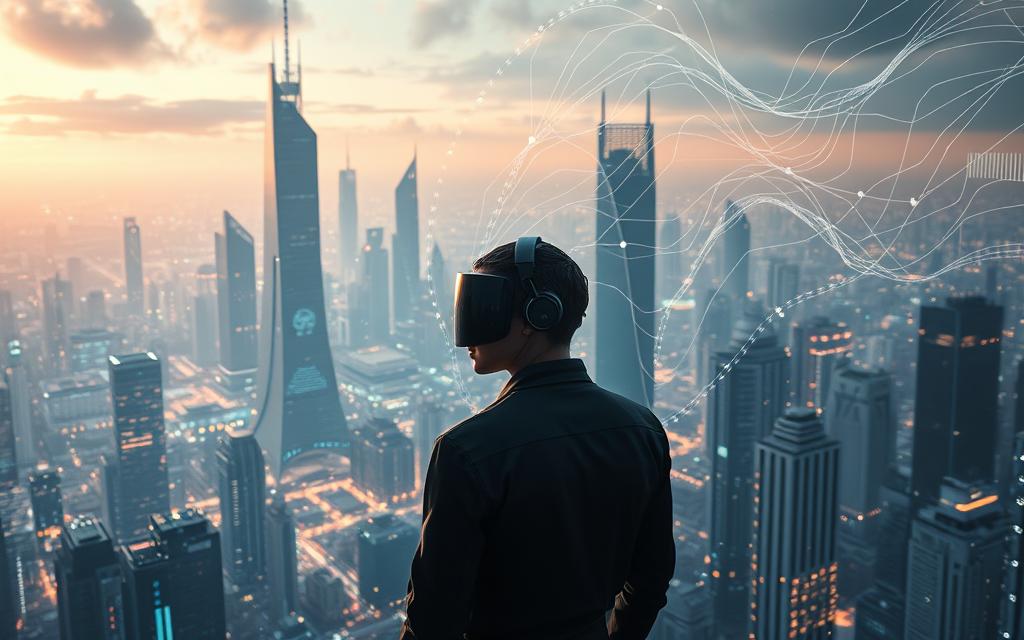
The fast growth of artificial intelligence is a big change in our time. It’s changing how machines see, learn, and talk to us. This is opening up new chances in many fields.
Machine Learning and Deep Learning Advancements
Today’s machine learning can do more than just spot patterns. It can find complex links in huge data sets and make very accurate guesses.
Deep learning has sped up this progress. These complex neural networks are like the human brain. They learn from what they do and get better over time.
Neural Networks and Their Applications
Artificial neural networks are key to today’s AI. They work by passing information through layers, making smart choices.
They’re used in many ways, like:
- Spotting financial fraud
- Helping with medical diagnoses
- Improving supply chains
- Recommending content
Natural Language Processing Breakthroughs
Natural language processing has become very advanced. Now, systems can understand context, feelings, and even small details in language.
Models like GPT show this skill. As Peter Diamandis said, they could be the next big thing in making us more creative and productive.
Computer Vision and Image Recognition
Computer vision has changed how machines see pictures. It’s used in everything from medical scans to self-driving cars. These systems can spot things, patterns, and oddities with incredible accuracy.
Some examples include:
- Checking product quality in factories
- Managing stock in shops
- Improving security cameras
- Monitoring farms
AI in Autonomous Systems and Robotics
Artificial intelligence in self-driving machines is a big step forward. These smart machines can do things on their own, like sensing, processing, and acting.
But, experts warn, we need to think carefully about this fast progress. We must consider the ethics and safety of AI, like generative AI.
Here are some examples of AI in action:
- Robots in warehouses
- Help in surgery
- Managing smart cities
- Drone monitoring of the environment
AI will keep getting better and more connected. This technological convergence will change how we work with machines in the future.
Quantum Computing: Beyond Binary Limitations
Artificial intelligence is a big step forward, but quantum computing is even more groundbreaking. It goes beyond the old ways of computing, using quantum mechanics to change how we process information.
Principles of Quantum Mechanics in Computing
Quantum computing works in ways that seem strange to us. It uses tiny particles to do things that regular computers can’t. This lets quantum computers do things much faster than before.
Qubits and Quantum Superposition
Qubits are different from regular bits. They can be more than just 0 or 1 at the same time. This means quantum computers can solve problems much faster.
Superposition is key to quantum computers’ power. It lets them do lots of things at once. This is great for solving complex problems and simulating quantum systems.
Quantum Entanglement Applications
Quantum entanglement is a strange connection between particles. It lets qubits work together in ways that regular bits can’t. This makes quantum computers even more powerful.
Entangled qubits help with error correction and quantum teleportation. These are important for making reliable quantum networks. They could change how we communicate around the world.
Current Quantum Computing Platforms
Big companies and research groups have made working quantum computers. These systems show what quantum technology can do today.
IBM Quantum Experience
The IBM Quantum Experience lets people use real quantum processors online. It helps teach and develop quantum computing for many fields.
IBM uses superconducting qubits at very low temperatures. They keep improving their processors, adding more qubits and power.
Google Sycamore Processor
Google’s Sycamore processor did something amazing. It solved a problem that would take regular computers thousands of years. It has 53 qubits and shows how far quantum computing has come.
The Sycamore uses transmon qubits, which last longer. Google’s achievement shows quantum computers can beat regular computers at some tasks.
Potential Applications Across Industries
Quantum computing could change many fields. It could help in drug discovery, finance, and more. It’s a big deal for any industry that needs complex calculations.
In drug discovery, quantum computers could simulate molecules better. This could lead to new medicines faster. It’s also good for materials science.
Finance could use quantum computing for better portfolio management and risk analysis. It could also help with fast trading. This could change how financial markets work.
But quantum computing also brings risks, like breaking encryption. This is a big problem for security. It’s a challenge to make new, secure ways to communicate.
Quantum computing is also useful for logistics, AI, and climate modelling. As it gets better, we’ll see more of these uses in real life.
Biotechnology: Engineering Life Itself
Biotechnology is a big step for humans, letting us change and improve living things. It’s leading to big changes in healthcare, farming, and how we protect the environment. By combining biology with computers, we’re making discoveries that were once just dreams.

Genetic Engineering and CRISPR Technology
Genetic engineering has grown from simple gene splicing to precise tools like CRISPR-Cas9. This new tech lets scientists edit DNA with great accuracy and speed. It’s changing many industries in big ways.
Gene Editing Applications
CRISPR is making huge strides in many areas. Doctors can fix genes that cause diseases. Farmers are growing crops that are better for us and can handle tough weather. It’s also helping create animals for studying human diseases, speeding up finding new medicines.
There are new treatments for sickle cell anaemia and beta-thalassaemia. These could help get rid of genetic diseases for good. The fast pace of these discoveries shows how powerful genetic engineering is today.
Ethical Considerations and Regulations
Being able to change genes raises big questions. There’s worry about changing genes that are passed on to future generations. Most countries have rules for genetic research and using it in medicine.
There’s ongoing debate worldwide about how far we should go with genetic changes. We need to balance scientific progress with ethics. Strong rules help ensure we’re using this tech wisely.
Synthetic Biology and Biomanufacturing
Synthetic biology is about designing new biological parts and systems. Scientists are making new biological paths and circuits. This field combines engineering with biology to create new biological solutions.
Biomanufacturing uses synthetic biology to make chemicals, materials, and medicines in a green way. Microorganisms are engineered to make specific products. This is a better choice for the planet than traditional methods.
Now, companies are making biofuels, bioplastics, and special chemicals using these biological systems. This shows how biotechnology is helping the economy and the environment.
Personalised Medicine and Healthcare Innovations
Personalised medicine is a big win for healthcare thanks to biotechnology. It means treatments are tailored to each person’s genes and health. This is a big change from the old way of treating everyone the same.
DNA Sequencing Advancements
New DNA sequencing tech has made getting genetic info much cheaper and faster. Now, we can look at a person’s whole genome to help diagnose and treat diseases. This leads to finding diseases sooner and treating them better.
Sequencing tech keeps getting better, making it faster, more accurate, and easier to use. Adding artificial intelligence to this helps find patterns and predict outcomes. This mix of biotech and computer science is leading to more medical breakthroughs.
Stem Cell Research Progress
Stem cell research has moved from basic science to real treatments. Scientists can now use stem cells to fix damaged tissues and organs. This is very promising for treating diseases and injuries.
Recently, scientists have made progress with induced pluripotent stem cells. These cells can be turned into different types for transplants and studying diseases. This field is growing fast as we learn more and get better at using these cells.
Stem cell tech combined with genetic engineering is creating new ways to treat diseases. This makes biotechnology a key player in changing healthcare and causing big changes in the medical field.
Conclusion
The mix of artificial intelligence, quantum computing, and biotechnology is changing technology fast. These areas are leading to new ideas and big changes for the world.
This blend opens up new chances in health, safety, and business. But, it also brings big challenges that need careful thought and planning. We must handle these risks and use the good sides of these technologies wisely.
More study and working together across countries will help us use these technologies right. Their effects on our lives, work, and safety will change what we can do in the next few years.
FAQ
What are next-generation technologies?
Next-generation technologies include advanced fields like artificial intelligence, quantum computing, and biotechnology. They mark a big change from old tech ways. These new techs grow fast, mix different fields, and aim to solve big problems like health, climate, and security.
How does artificial intelligence contribute to modern innovation?
Artificial intelligence boosts innovation with its machine learning, deep learning, and more. It helps with predictive analytics and robotics. This changes many industries by making things more efficient and solving problems better.
What is quantum computing and how does it differ from classical computing?
Quantum computing uses quantum mechanics to process info in new ways. Unlike old computers, it can solve complex problems fast. It’s in early stages, but leaders like IBM Quantum Experience and Google’s Sycamore are leading the way.
What role does biotechnology play in next-generation solutions?
Biotechnology uses biology to solve big challenges, mainly in health and farming. It includes genetic engineering, synthetic biology, and personalised medicine. These areas offer huge benefits but also raise important questions about ethics and rules.
How do these technologies converge and impact society?
When AI, quantum computing, and biotechnology come together, they create new solutions. For example, AI can help find new medicines. But, this mix also brings up big questions about ethics and security. We need strong rules and global teamwork to use these techs wisely.
Are there risks associated with next-generation technologies?
Yes, these techs have risks like cyber threats from quantum computing and ethical worries in genetic engineering. AI can also have biases. We must have clear rules, open research, and work together worldwide to use these techs safely and for the good of all.